Yunzhu New Materials logo
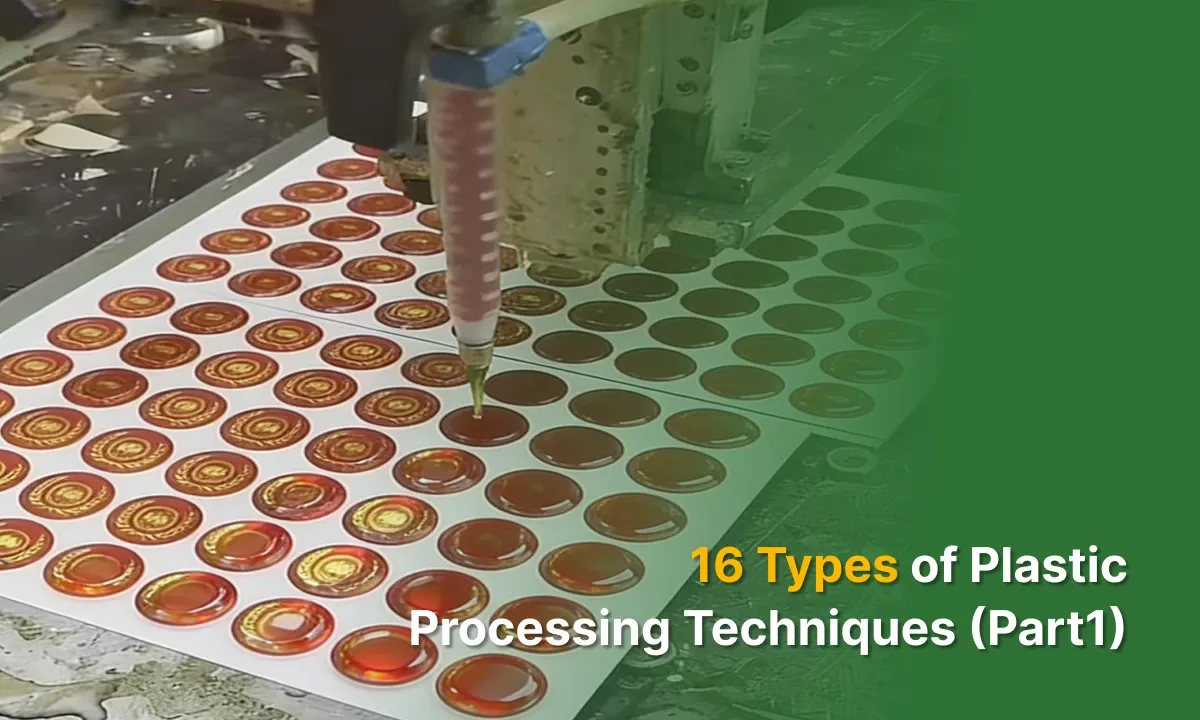
16 Types of Plastic Processing Techniques (Part 1)

16 Types of Plastic Processing Techniques (Part 1)

Plastic molding starts with the right process selection and succeeds with smooth demolding. We have compiled the 16 most comprehensive plastic processing techniques in the industry to help you understand manufacturing logic. However, remember: no matter which process you choose, the application of plastic release agents, rubber release agents, and composite material release agents is especially important. Understanding the process ensures you make the right product, while choosing our high-quality release agents guarantees every mold opens smoothly, allowing productivity and quality to improve simultaneously.

Complete Guide to Release Agent Selection: From Types to Practical Selection Tips

Complete Guide to Release Agent Selection: From Types to Practical Selection Tips

In molding and forming processes, release agents play a critical role. Yunzhu New Materials has been engaged in the production of release agents for many years. Throughout this journey, we have encountered a wide range of demolding challenges and shared extensive hands-on experience, helping many customers grow from having zero experience to becoming true release agent experts. In this article, we provide a comprehensive overview of release agent types, aiming to help customers identify the most suitable solution to ensure smooth and efficient production.

High-Resilience PU Foam Defects & Solutions for Automotive Seats

High-Resilience PU Foam Defects & Solutions for Automotive Seats

High-resilience polyurethane (HR PU) foam has become the most widely used foaming material for automotive seats and headrests due to its excellent comfort performance and cost efficiency. However, in actual production, factors such as raw material quality, process parameters, mold condition, and release agent selection often lead to defects including shrinkage, collapse, surface defects, tearing, and delamination, directly affecting seat appearance and overall quality. This article analyzes the manufacturing process of automotive PU foam, summarizes common defects in high-resilience polyurethane foam production, and provides practical solutions focusing on process optimization and PU foam release agent selection.

Procurement Guide:  Concrete Release Agent Solutions for High-Temperature & Dusty Environments

Procurement Guide: Concrete Release Agent Solutions for High-Temperature & Dusty Environments

Under high-temperature climate conditions (above 40°C), construction projects face extremely harsh environmental challenges. High temperatures not only accelerate the hydration process of concrete, but also place very high demands on the physical and chemical stability of release agents. At the same time, suspended particulate matter in dusty environments can easily contaminate the release agent film, leading to honeycombing, surface pitting, and even structural damage on concrete surfaces. This article explores key precautions for using release agents in high-temperature and dusty environments.

Demolding Solutions for Complex Concrete Molds(PART 2)

Demolding Solutions for Complex Concrete Molds(PART 2)

In our previous blog post, we introduced the concept of special-shaped concrete molds and the challenges associated with their demolding. Today, we’re diving deeper into this topic to share our recommendations on how to tackle these demolding difficulties!

Demolding Solutions for Complex Concrete Molds(PART 1)

Demolding Solutions for Complex Concrete Molds(PART 1)

As modern architectural designs become increasingly diverse, complex-shaped (irregular) concrete components are being widely adopted in bridges, curtain walls, and prefabricated buildings. However, due to their intricate geometric boundaries, deep recesses, and non-continuous surface curvatures, the demolding process for these components faces significantly higher mechanical resistance compared to standard molds. Failure in demolding does not only manifest as surface defects like honeycombing, pitting, or edge chipping; it can also cause structural micro-cracks due to localized stress concentration or even lead to permanent mold deformation. Based on our industry expertise, this article analyzes the root causes of these demolding difficulties and provides practical solutions to ensure stable stripping and high-quality finishes.

 A Practical Step-by-Step Guide: How to Identify a Reliable and Suitable Release Agent Supplier in China

A Practical Step-by-Step Guide: How to Identify a Reliable and Suitable Release Agent Supplier in China

In the release agent industry—although highly specialized—it plays a critical role in determining product quality and production stability. Choosing a reliable and suitable release agent supplier in China is often far more important than simply comparing prices. With a large number of manufacturers in the market and significant differences in technical capability and consistency, many purchasing managers face the same questions: - How can you tell whether a supplier truly has technical expertise? - Can they provide stable and consistent supply? - Are their products genuinely suitable for your specific application? Based on real industry experience, this article examines common challenges and practical requirements from key perspectives, including certifications, product suitability, technical support, and delivery capability. It provides a clear framework to help you quickly identify trustworthy, long-term Chinese release agent suppliers, reduce trial-and-error costs, and improve overall production efficiency.

Classification & Application of Water-Based Release Agents in China

Classification & Application of Water-Based Release Agents in China

The Green Shift in Manufacturing: Driven by the imperative for "Green Manufacturing" and the "Dual Carbon" (Peak Carbon & Carbon Neutrality) goals, China’s manufacturing sector is rapidly transitioning from solvent-based oil release agents to Water-Based Release Agents. The stringent policy limitations on Volatile Organic Compounds (VOCs) have made "VOC elimination" an industry consensus. Concurrently, the increasing advantages of water-based systems in terms of safety, comprehensive performance, and total lifecycle cost are accelerating their shift from a "preferable option" to a "mainstream solution" across multiple industries. Compared to oil-based systems, water-based release agents utilize water as the carrier, significantly reducing VOC emissions and odor, thus improving the working environment. Their non-flammable nature effectively lowers the risk of fire and explosion, minimizing occupational health hazards. In terms of formulation, water-based systems can form a uniform, dense lubricating barrier film on the mold surface, achieving low demolding force and high surface quality. They also support high dilution ratios and convenient cleaning/maintenance, which helps reduce material consumption and overall operational costs, balancing production efficiency with sustainability goals. YunZhu New Material has specialized in water-based release agents for years. In the subsequent sections, we will delve into the classification system and major application scenarios of water-based release agents in China. Let's redefine the application of water-based release agents for "Made in China."

Evolution of Formwork Release Agent Processes and Market Competitiveness

Evolution of Formwork Release Agent Processes and Market Competitiveness

Before steel bars and concrete constructed the framework of modern China, there was a critical yet often overlooked step in the concrete construction process: demolding. The practice began with basic, experience-driven methods, such as applying a layer of waste engine oil or simple soap solution. Today, the technology has undergone a significant transformation. The shift to water-based series has become mainstream. The application of bio-based raw materials, biodegradable surfactants, and nano-modification technologies is driving the next level of upgrade in China's release agent manufacturing. This push has led to the widespread adoption of green, eco-friendly, and high-performance concrete release agents in China, enabling domestic enterprises to establish strong competitiveness against established global brands.

How Release Agents Affect Carbon Fiber Performance and Appearance

How Release Agents Affect Carbon Fiber Performance and Appearance

Introduction: Carbon fiber reinforced polymer (CFRP) is often regarded as the crown jewel of modern manufacturing. From F1 race cars that chase ultimate speed, to massive wind turbine blades that deliver clean energy, and even to the golf clubs and bicycle frames we use in everyday life, CFRP—with its exceptional specific strength and lightweight characteristics—is driving a true materials revolution. However, the process of manufacturing these high-performance components is far from simple. CFRP parts are typically made using thermoset resins (mainly epoxy or vinyl ester resins) as the matrix, which are cured under high temperature and high pressure inside the mold. If demolding is not smooth, it can lead to part damage, mold scratching, and in more severe cases, forced demolding will introduce defects on the surface of the carbon fiber part. These defects not only affect the appearance, but also interfere with secondary processes (such as painting, bonding, or clear coating) and can ultimately compromise the mechanical performance of the finished component.

WhatsApp